Media Summary: A look at how thermal wind can sometimes (not always) tell us something about temperature advection at some level in the ... What the pressure gradient force looks like in natural coordinates. A look at some of the physical consequences behind the centripetal and centrifugal forces.

Metr2023 Lecture 12 Segment 4 - Detailed Analysis & Overview

A look at how thermal wind can sometimes (not always) tell us something about temperature advection at some level in the ... What the pressure gradient force looks like in natural coordinates. A look at some of the physical consequences behind the centripetal and centrifugal forces. Many meteorologists prefer to represent state variables in the atmosphere as the sum of a background (mean) state and a ... How does the atmosphere attempt to resolve radiative balances? One key mechanism is to create cyclones. An exercise to check your understanding of the Coriolis force.

A look at the low-level jet, which typically exists between 1-2 km above ground level. Unlike most jet-streams, the low-level jet has ... Stationary fronts are never perfectly stationary, but are sluggish enough to be called stationary. Occluded fronts can produce very ... What is thermal wind and why does it exist? A first look at two different approaches to analyzing atmospheric flow patterns. A graphical representation of what we explored in the previous What the acceleration vector looks like in natural coordinates.

Photo Gallery

METR2023 - Lecture 12 - Segment 4: Physical Consequences of Thermal Wind
METR2023 - Lecture 10 - Segment 4: Pressure Gradient Force in Natural Coordinates
METR2023 - Lecture 4 - Segment 2: Physical Consequences of Centripetal and Centrifugal Force
METR2023 - Lecture 24 - Segment 4: A Widely Used Method of Representing Atmospheric Variables
METR2023 - Lecture 18 - Segment 1: Cyclone Types and the Norwegian Cyclone Model
METR2023 - Lecture 5 - Segment 4: Coriolis Force Exercise
METR2023 - Lecture 16 - Segment 1: The Low-Level Jet
METR2023 - Lecture 19 - Segment 4: Stationary and Occluded Fronts
METR2023 - Lecture 12 - Segment 2: Introduction to Thermal Wind
METR2023 - Lecture 12 - Segment 1: Trajectories and Streamlines
METR2023 - Lecture 12 - Segment 3: Derivation of Thermal Wind
METR2023 - Lecture 11 - Segment 3: Illustrating the Solutions of the Gradient Wind Balance
View Detailed Profile
METR2023 - Lecture 12 - Segment 4: Physical Consequences of Thermal Wind

METR2023 - Lecture 12 - Segment 4: Physical Consequences of Thermal Wind

A look at how thermal wind can sometimes (not always) tell us something about temperature advection at some level in the ...

METR2023 - Lecture 10 - Segment 4: Pressure Gradient Force in Natural Coordinates

METR2023 - Lecture 10 - Segment 4: Pressure Gradient Force in Natural Coordinates

What the pressure gradient force looks like in natural coordinates.

METR2023 - Lecture 4 - Segment 2: Physical Consequences of Centripetal and Centrifugal Force

METR2023 - Lecture 4 - Segment 2: Physical Consequences of Centripetal and Centrifugal Force

A look at some of the physical consequences behind the centripetal and centrifugal forces.

METR2023 - Lecture 24 - Segment 4: A Widely Used Method of Representing Atmospheric Variables

METR2023 - Lecture 24 - Segment 4: A Widely Used Method of Representing Atmospheric Variables

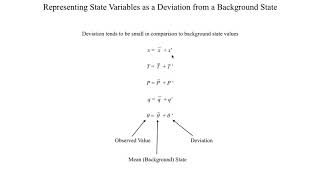
Many meteorologists prefer to represent state variables in the atmosphere as the sum of a background (mean) state and a ...

METR2023 - Lecture 18 - Segment 1: Cyclone Types and the Norwegian Cyclone Model

METR2023 - Lecture 18 - Segment 1: Cyclone Types and the Norwegian Cyclone Model

How does the atmosphere attempt to resolve radiative balances? One key mechanism is to create cyclones.

METR2023 - Lecture 5 - Segment 4: Coriolis Force Exercise

METR2023 - Lecture 5 - Segment 4: Coriolis Force Exercise

An exercise to check your understanding of the Coriolis force.

METR2023 - Lecture 16 - Segment 1: The Low-Level Jet

METR2023 - Lecture 16 - Segment 1: The Low-Level Jet

A look at the low-level jet, which typically exists between 1-2 km above ground level. Unlike most jet-streams, the low-level jet has ...

METR2023 - Lecture 19 - Segment 4: Stationary and Occluded Fronts

METR2023 - Lecture 19 - Segment 4: Stationary and Occluded Fronts

Stationary fronts are never perfectly stationary, but are sluggish enough to be called stationary. Occluded fronts can produce very ...

METR2023 - Lecture 12 - Segment 2: Introduction to Thermal Wind

METR2023 - Lecture 12 - Segment 2: Introduction to Thermal Wind

What is thermal wind and why does it exist?

METR2023 - Lecture 12 - Segment 1: Trajectories and Streamlines

METR2023 - Lecture 12 - Segment 1: Trajectories and Streamlines

A first look at two different approaches to analyzing atmospheric flow patterns.

METR2023 - Lecture 12 - Segment 3: Derivation of Thermal Wind

METR2023 - Lecture 12 - Segment 3: Derivation of Thermal Wind

The math behind thermal wind.

METR2023 - Lecture 11 - Segment 3: Illustrating the Solutions of the Gradient Wind Balance

METR2023 - Lecture 11 - Segment 3: Illustrating the Solutions of the Gradient Wind Balance

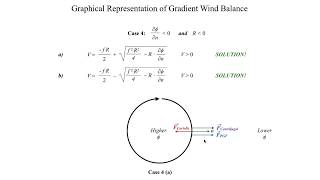
A graphical representation of what we explored in the previous

METR2023 - Lecture 10 - Segment 3: Horizontal Acceleration Vector in Natural Coordinates

METR2023 - Lecture 10 - Segment 3: Horizontal Acceleration Vector in Natural Coordinates

What the acceleration vector looks like in natural coordinates.