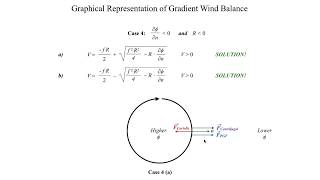
Media Summary: What the acceleration vector looks like in natural coordinates. A look at what our Cartesian wind vector (in terms of u, v, and w) looks like in natural coordinates. A graphical representation of what we explored in the previous
Metr2023 Lecture 10 Segment 3 - Detailed Analysis & Overview
What the acceleration vector looks like in natural coordinates. A look at what our Cartesian wind vector (in terms of u, v, and w) looks like in natural coordinates. A graphical representation of what we explored in the previous What the pressure gradient force looks like in natural coordinates. A look at some force balances in natural coordinates. A first look at the vertical structure of a typical mid-latitude cyclone.
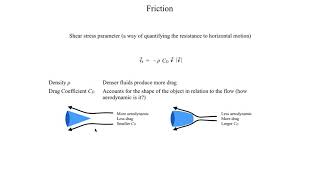
A first look at the natural coordinate system, which can simplify our conceptual model of the atmosphere. A first look at the horizontal structure of a typical mid-latitude cyclone. What Newton's second law looks like in natural coordinates. An exercise to check your understanding of the previous How does the atmosphere attempt to resolve radiative balances? One key mechanism is to create cyclones. A first look at friction and how it affects atmospheric flow.
What is the Polar Cell and why does it exist?