Media Summary: A look at some of the physical consequences behind the Hypsometric Equation. A look at the pressure gradient force (PGF) on a surface of constant pressure (otherwise known as an isobaric surface). Cyclones often form on the east side of the Rocky Mountains. Potential vorticity offers an explanation as to why this occurs.
Metr2023 Lecture 3 Segment 2 - Detailed Analysis & Overview
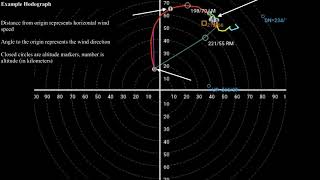
A look at some of the physical consequences behind the Hypsometric Equation. A look at the pressure gradient force (PGF) on a surface of constant pressure (otherwise known as an isobaric surface). Cyclones often form on the east side of the Rocky Mountains. Potential vorticity offers an explanation as to why this occurs. A look at some of the mechanisms that can intensify cyclones, and the introduction of a new concept known as "potential vorticity". What do all the fancy lines and symbols on a hodograph mean? Link to the splitting storm animation: ... An exercise to check your understanding of the Hypsometric Equation (and a discussion of the results behind this specific ...
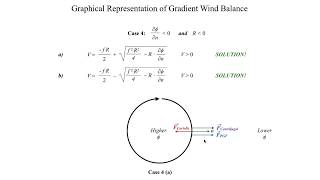
What is thermal wind and why does it exist? A graphical representation of what we explored in the previous What happens between weather (days) and climate (decades)? That's when oscillations enter the story, which are variations ... A look at some of the physical consequences behind the centripetal and centrifugal forces. An overview of what atmospheric factors favor strong straight-line wind gusts. Please keep in mind that there are multiple different ... A first look at the horizontal structure of a typical mid-latitude cyclone.