Media Summary: Why does Alex Clark, from the University of Leicester, have a strange fascination with 163? More links & stuff in full description ... Dr James Grime discusses a couple of clever formulas which are pandigital - using all the numbers from 1-9. More links & stuff in ... Toilets at musical festivals are notorious - but how many should you check before committing!? EXTENDED MATH ENDING: ...

37 Numberphile - Detailed Analysis & Overview

Why does Alex Clark, from the University of Leicester, have a strange fascination with 163? More links & stuff in full description ... Dr James Grime discusses a couple of clever formulas which are pandigital - using all the numbers from 1-9. More links & stuff in ... Toilets at musical festivals are notorious - but how many should you check before committing!? EXTENDED MATH ENDING: ... Маленький математический фокус Оригинал: Ben Sparks discusses aliquot sequences and why 276 holds a surprise. This video continues at Free trial at The Great Courses Plus: Dr James Grime discusses "e" - the famed Euler's Number.

Confused 1+2+3+…=-1/12 comments originating from that infamous Edmund Harriss introduces a very cool tiling and talks about Tribonacci Numbers. More links & stuff in full description below ... Breaking Math News! The "Square-Sum problem" by Matt Parker/ Matt Parker discusses the one constant to rule all primes - and it's hiding in plain sight. More links & stuff in full description below ...

Photo Gallery

37 - Numberphile
Why is this number everywhere?
163 and Ramanujan Constant - Numberphile
Incredible Formula - Numberphile
Mathematical Way to Choose a Toilet - Numberphile
Число 37 - Numberphile
An amazing thing about 276 - Numberphile
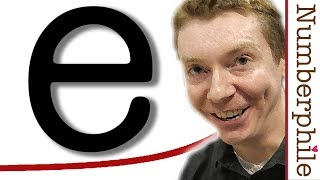
e (Euler's Number) - Numberphile
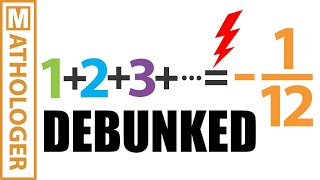
Numberphile v. Math: the truth about 1+2+3+...=-1/12
87,539,319 - Numberphile
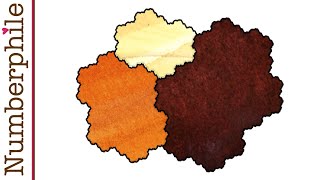
Tribonacci Numbers (and the Rauzy Fractal) - Numberphile
Numberphile's Square-Sum Problem was solved! #SoME2
View Detailed Profile
37 - Numberphile

37 - Numberphile

Just a quick nugget about the number

Why is this number everywhere?

Why is this number everywhere?

The number

163 and Ramanujan Constant - Numberphile

163 and Ramanujan Constant - Numberphile

Why does Alex Clark, from the University of Leicester, have a strange fascination with 163? More links & stuff in full description ...

Incredible Formula - Numberphile

Incredible Formula - Numberphile

Dr James Grime discusses a couple of clever formulas which are pandigital - using all the numbers from 1-9. More links & stuff in ...

Mathematical Way to Choose a Toilet - Numberphile

Mathematical Way to Choose a Toilet - Numberphile

Toilets at musical festivals are notorious - but how many should you check before committing!? EXTENDED MATH ENDING: ...

Число 37 - Numberphile

Число 37 - Numberphile

Маленький математический фокус Оригинал: https://www.youtube.com/watch?v=EJRXWNWJOrQ

An amazing thing about 276 - Numberphile

An amazing thing about 276 - Numberphile

Ben Sparks discusses aliquot sequences and why 276 holds a surprise. This video continues at https://youtu.be/Yh1QUYn2f3I ...

e (Euler's Number) - Numberphile

e (Euler's Number) - Numberphile

Free trial at The Great Courses Plus: http://ow.ly/tKWt306Gg7a Dr James Grime discusses "e" - the famed Euler's Number.

Numberphile v. Math: the truth about 1+2+3+...=-1/12

Numberphile v. Math: the truth about 1+2+3+...=-1/12

Confused 1+2+3+…=-1/12 comments originating from that infamous

87,539,319 - Numberphile

87,539,319 - Numberphile

Free audio book from Audible: http://www.audible.com/

Tribonacci Numbers (and the Rauzy Fractal) - Numberphile

Tribonacci Numbers (and the Rauzy Fractal) - Numberphile

Edmund Harriss introduces a very cool tiling and talks about Tribonacci Numbers. More links & stuff in full description below ...

Numberphile's Square-Sum Problem was solved! #SoME2

Numberphile's Square-Sum Problem was solved! #SoME2

Breaking Math News! The "Square-Sum problem" by Matt Parker/

The Prime Constant - Numberphile

The Prime Constant - Numberphile

Matt Parker discusses the one constant to rule all primes - and it's hiding in plain sight. More links & stuff in full description below ...